Specials
Specials make a well rounded student...
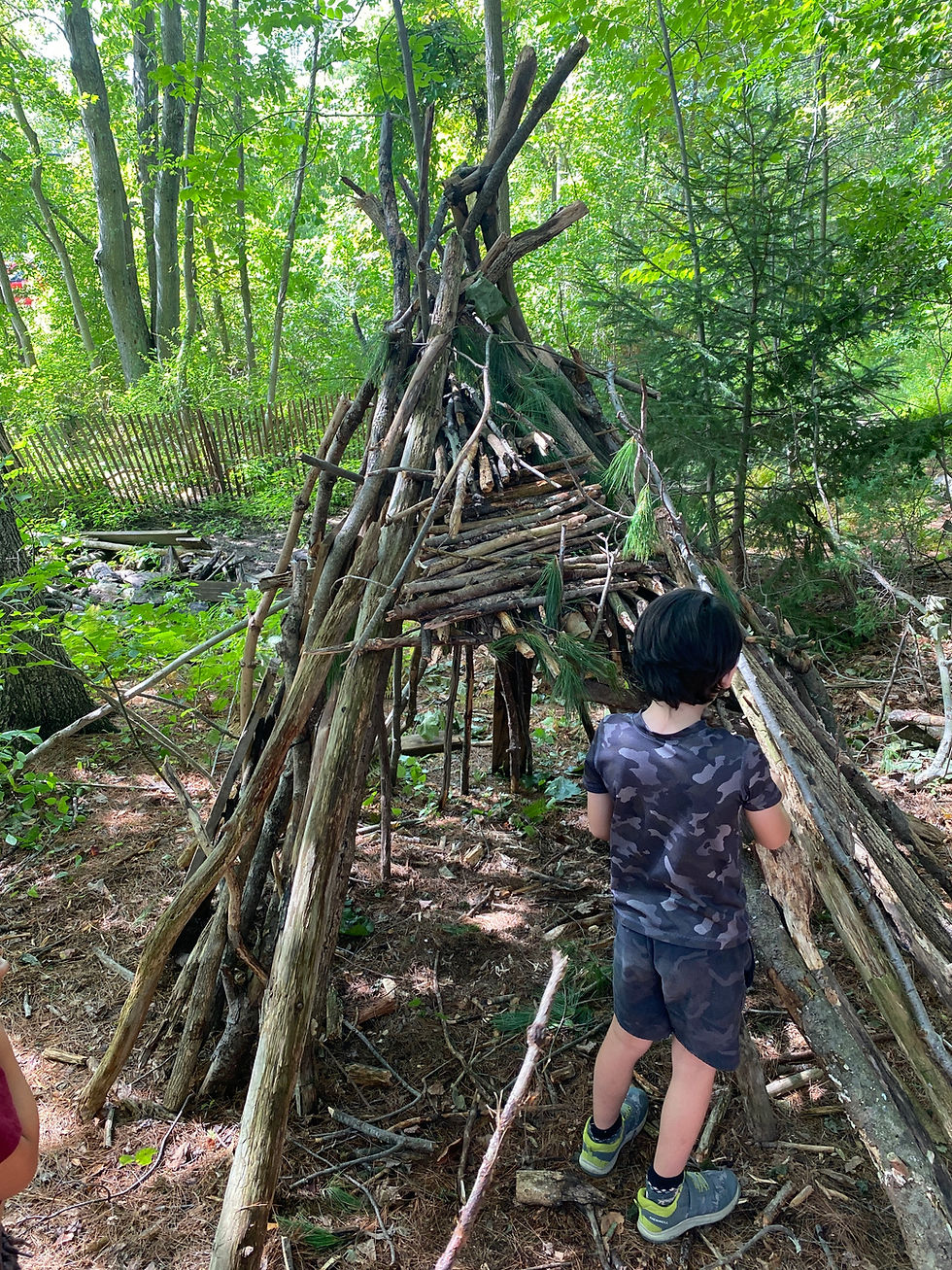
Woodworking & Bushcraft
Students at Touchstone begin fall and spring woodshop classes in Level 1 (both Hollow and Burrow classrooms), where our Woodshop teacher introduces them to woodworking. The program is strongly influenced by the Sloyd method, a 19th-century Finnish educational tradition that values our natural desire to wonder, create, and refine. Through handcrafts and a physical connection to their work, children’s executive function, physical coordination, and resilience are strengthened. Students benefit from individualized instruction, working at their own pace with direct, one-on-one guidance from the instructor. Skills and hand tools are introduced in a careful, step-by-step order, and students create practical, everyday wooden objects they can take home. Each student completes all project work independently, fostering self-reliance.
During the winter months, the class focus moves to bushcraft and outdoor skills. Bushcraft uses hands-on skills and knowledge to survive, thrive, and live comfortably in the natural environment. Through bushcraft and outdoor skills, students learn practical ways to move through and care for outdoor spaces. Depending on their age, they may practice navigation, use tools safely, build and tend fires, identify and track signs of wildlife, cook outdoors, tie knots, and use natural materials thoughtfully.
These experiences invite students to solve problems, take appropriate risks, work collaboratively, develop perseverance, and become increasingly capable and confident outside.

Thematic Arts
Within each classroom’s Thematic Studies, students create, build, and collaborate using a wide variety of materials and media. The arts are not treated as separate from academic learning; instead, they give students another way to explore ideas, make connections, solve problems, and communicate what they understand.
Students might create papier-mâché models of the birds they are studying, write and perform a skit about a Constitutional amendment, design a visual representation of a scientific concept, or use mathematical ideas to build a sculpture. These projects ask students to move beyond simply learning about a subject and instead make something with what they know.
Teachers encourage experimentation, imagination, and thoughtful risk-taking, helping students develop both creative confidence and practical skills. In Level 1–3 classrooms, an arts specialist works alongside classroom teachers to design projects connected to students’ studies and teach techniques, tools, and materials. As students grow, they increasingly choose how to represent their ideas, revise their work, collaborate with others, and take a project from an initial idea to a finished piece.
We know that children understand ideas more deeply when they have opportunities to experience them, interpret them, and create something of their own, and at Touchstone, they can do just that!

Theater Arts
Students in Levels 4 through 8 participate in two Theater Arts classes each week. Through theater games, improvisation, reading and performing skits, and writing original scenes and short plays, students learn to take creative risks, work collaboratively, and become increasingly confident speaking in front of others.
Theater Arts gives students opportunities to experiment with character, movement, voice, storytelling, and perspective. Students practice vocal techniques and stage presence, explore elements of set and production design, and learn how many individual contributions come together to create a successful performance. Along the way, they develop skills that reach beyond the stage: listening closely, responding in the moment, communicating ideas clearly, giving and receiving feedback, and supporting the work of an ensemble.
Students also experience the process of bringing a performance from its earliest ideas through rehearsal and onto the stage. Each class performs for the school community at least once during the year, giving students the chance to share their work with an audience and see how much their confidence and public-speaking skills can grow through practice.
At Touchstone, theater is a place for students to be playful, expressive, and brave as they try on new perspectives, share their voices, and create something together that no one student could have made alone.

Physical Education
Physical Education at Touchstone is grounded in two important themes: Challenge by Choice and Good Sportsmanship. Students participate in PE twice a week in the supportive environment of their multi-age classrooms, in a class that is designed to foster physical, social, emotional, and intellectual growth through movement, play, and fun.
Challenge by Choice encourages students to stretch themselves while recognizing that an appropriate challenge may look different for each child. Within the same activity, students may choose different levels of difficulty as they build skills, confidence, fitness, coordination, and problem-solving abilities. The emphasis is on personal growth and success within the experience of being part of a group.
Good Sportsmanship focuses on how students interact with the game and with one another. Students practice being supportive teammates and respectful competitors, communicating clearly, playing fairly, and navigating both success and disappointment.
Games and activities intentionally engage physical, social-emotional, and cognitive skills while encouraging students to think, move, collaborate, and have fun. This philosophy extends beyond structured PE classes and into recess, where students learn to bring the same spirit of inclusive game play, healthy challenge, and good sportsmanship into their everyday play.

Project Blocks
Project Blocks give students the opportunity to step outside their regular classroom communities and spend several weeks exploring a topic, craft, or skill in depth. Working in mixed-age groups, students choose from a range of offerings that draw on the interests, talents, and expertise of teachers and community members.
Projects might involve woodworking, fiber arts, cooking, theater, engineering, printmaking, nature study, or science and technology. Some projects result in a finished product or performance, while others are centered on experimentation, discovery, and developing new skills. Across all of them, students have time to try something unfamiliar, learn alongside students of different ages, solve problems, and experience the satisfaction that comes from sustained attention to an idea.
At the end of each Project Block series, students share their work with families and the wider Touchstone community at a Community Meeting. A sharing might include poems and performances, handmade objects, demonstrations, experiments, or works in progress.